Venetian Carnival: History, Masks, Food & Traditions
Carnival in Venice, Explained
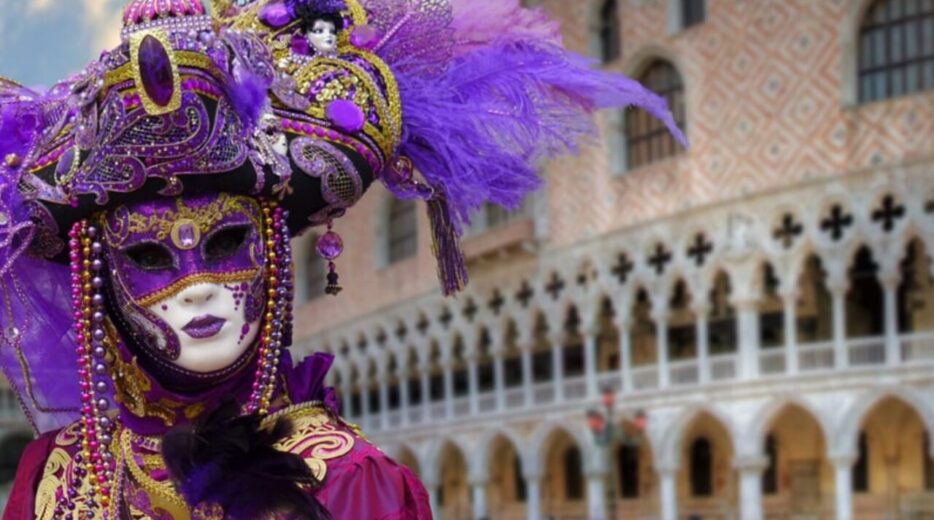
The Venetian Carnival (Carnevale di Venezia) is an annual festival in Venice, Italy, known for its masks, costumes, and historic traditions dating back to the Middle Ages.
Today, Venetian Carnival is one of Italy’s most loved celebrations, and no city lives it quite like Venice. For a few weeks each year, the city becomes a living stage: masked figures drifting across bridges, music echoing through narrow calli, pastry shop windows filled with sugar-dusted sweets, and history unfolding in real time.
From extravagant costumes and masquerade balls to simple rituals like stopping for a frittella and a glass of wine, Carnevale brings together indulgence, anonymity, and centuries of tradition.
If you’re thinking of visiting Venice at its most theatrical and festive, this guide explores the history, masks, food that define Venetian Carnival and the reason why it still matters today.
Where Did Carnevale Come From?
Carnevale is closely linked to Lent, the 40 days period before Easter when festivities were traditionally forbidden and rich foods like meat, sugar, and fats were off the table. Even the name reflects this tradition: Carnevale is thought to come from the Latin carne vale, meaning farewell to meat.
Before Lent began, it was a moment to indulge in rich food, wine, and shared pleasures: a brief sense of freedom and excess that still defines Carnival today.
When Did Carnevale Begin in Venice?
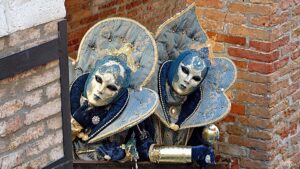
Venetian tradition traces Carnevale back to 1162, when the city celebrated a military victory over the Patriarch of Aquileia. What began as a public celebration slowly evolved into something much larger.
By the Renaissance and Baroque periods, Carnival had become a defining feature of Venetian life. Masks, public performances, and weeks of festivities turned the city into a place where social boundaries blurred and theatre spilled into the streets.
Was Carnevale Celebrated Continuously?
Not exactly.
By the late 18th century, Carnival began to fade. After the Austrian conquest of Venice in 1798, wearing masks was restricted and public celebrations were scaled back. In the 1930s, Mussolini officially banned Carnevale altogether.
How Was Venetian Carnevale Revived?
In 1979, Venetian artisans, artists, and cultural institutions came together to revive Carnevale. While tourism played a role, the focus was on restoring lost crafts and rituals, especially the ancient art of Venetian making masks.
The result was immediate and powerful. Today, nearly three million visitors come to Venice each year to experience Carnival, drawn by its unique mix of history, spectacle, and atmosphere.
What Is Carnevale Like in Venice Today?
Today, Carnevale in Venice unfolds over roughly two weeks, transforming the city into an open air stage. Behind palace doors, elegant masquerade balls fill historic halls with music and candlelight, while outside, the streets come alive with performances, concerts, and spontaneous moments of theatre.
Candle lit boat parades glide along the canals, and masked figures drift through piazzas, across bridges, and into Venice’s quieter corners, where the city feels both intimate and surreal.
While some events are exclusive, many celebrations remain free and open to everyone allowing locals and visitors alike to step into the rhythm of Carnival and experience Venice at its most playful and mysterious.
Why Are Masks So Important in Venice?
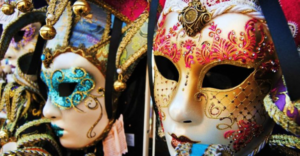
Masks have long been part of Venetian identity. As early as 1268, laws were already regulating their use, including some surprisingly specific rules, such as bans on throwing perfumed eggs.
By the Renaissance, masks had become central to Carnival, and by the 18th century, Venetians were permitted to wear them for up to six months of the year.
Masks offered anonymity and freedom. They allowed nobles and commoners to move through the city without social labels, worn not just during Carnival but also in theatres, gambling houses, and private clubs. For a city built on appearance and power, anonymity was its own kind of luxury.
What to Eat During Carnival in Venice
Carnival in Venice isn’t only about costumes and masks. Historically, it marked the last opportunity to enjoy rich food before Lent, and that sense of indulgence still lingers in the city today.
From early January through Ash Wednesday, Venice fills with the scent of fried dough, sugar, citrus, and wine, as seasonal sweets take over bakeries and neighbourhood bars.

Signature Venetian Carnival Sweets
Frittelle (Fritole)
The undisputed stars of Carnival. Soft, fried dough balls once made simply with raisins and pine nuts. Today they’re filled with custard, zabaione, chocolate, or ricotta: each pasticceria fiercely loyal to its own recipe. Available only during Carnival season, they’re considered the national sweet of the Veneto.
Galani (Crostoli)
Thin, crisp ribbons of fried dough dusted with powdered sugar. Light, airy, and dangerously addictive, often scented with wine or a touch of grappa.
Castagnole
Small, round dough balls, fried or baked and sometimes filled with cream. Less showy than frittelle, but deeply comforting.
Ravioli di Carnevale
Sweet, fried ravioli filled with ricotta, chocolate, or fruit jam. Less known outside Venice, but deeply tied to Carnival tradition.
Savoury Carnival Bites & Wine Bar Classics
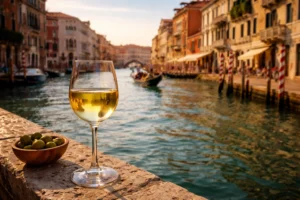
While sweets dominate the season, you can enjoy Venice’s savoury specialties in the city’s bacari, traditional wine bars where locals gather for cicchetti and a glass of wine (ombra).
Sarde in Saor
Fried sardines marinated in sweet-and-sour onions, vinegar, raisins, and pine nuts. Once a way to keep food fresh, sarde in saor are now one of Venice’s most iconic dishes.
Cicchetti
Small plates served throughout the day: whipped salted cod on toast, lagoon shrimp over polenta, fried meatballs, seasonal seafood.
Bigoli con Acciughe
Thick pasta with slow-cooked onions and anchovies, simple, tasty and unmistakably Venetian.
Carnival Food Today: Tradition with a Modern Touch
During Carnival, historic bakeries and contemporary kitchens each offer their own interpretation of classic sweets. Some chefs lighten the doughs, refine the fillings, or subtly adjust techniques. Even if so, they stay faithful to the flavours that have defined these recipes from the beginning.
What hasn’t changed is the ritual. Stopping for a warm frittella, lingering at a bacaro with cicchetti and wine, and letting food define the rhythm of the celebration.
Venice Beyond Carnival
After days spent wandering among masks, palaces, and museums, there’s no better way to slow down than getting your hands into a bowl of flour and water and learning to make fresh pasta with a local guide.
Our Venice cooking classes take place in welcoming restaurants in the city centre, where you’ll learn how to make fresh pasta by hand and prepare classic tiramisù. There’s Prosecco while you cook, wine with the meal, and plenty of conversation along the way.
Venice Carnival 2026 runs from: January 31 to February 17, 2026
The theme is “Olympus – The Origins of the Game”, celebrating the Milano–Cortina 2026. Winter Olympics.
Katarina Pavicevic, for CookingItaly