Easter Food in Italy: A Guide to Regional Cuisine
Easter food in Italy is a regional affair. In central Italy, lamb is the star. Naples brings out ricotta pies. Liguria layers greens into savoury bakes. Each dish reflects local ingredients and customs.
Here’s a clear, region-by-region look at Italian Easter cuisine, and where it connects to cooking in Italy today.
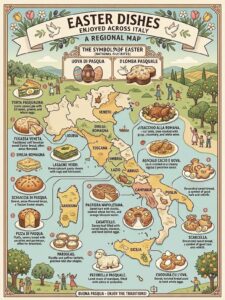
What Italians actually cook (and why it changes every 200 km)
Try to pin down ‘Italian Easter food’, and you get a patchwork. The holiday is the same, but the menus change from place to place. That variety is the point, and that’s why Easter cooking in Italy feels so local, wherever you are.
Let’s look at the map from north to south, and see which dishes belong where and why.
The non-negotiables: eggs, lamb, and a dove-shaped cake
Before we go region by region, three things show up almost everywhere:
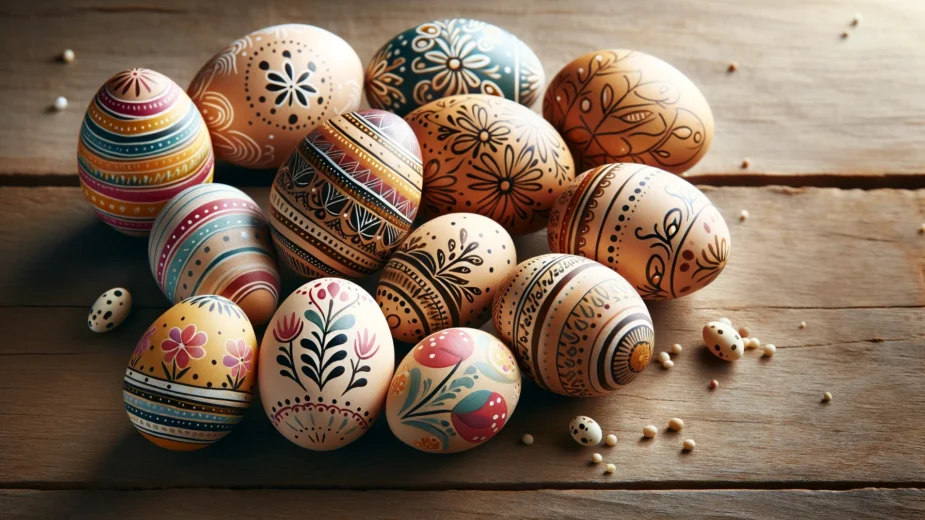
- Eggs signal rebirth and mark spring, showing up baked into breads or as decorations.
- Lamb is the main dish for Easter Sunday lunch. Roasted, stewed, or braised, depending on where you are.
- Colomba Pasquale is the classic Easter cake, a rustic, dove-shaped bread with almond glaze. It’s panettone’s spring cousin.
Everything else is local. In Marche, families bake ciambella di Pasqua, a tall, glazed ring cake. You won’t find it anywhere else, proving that every region has its own Easter recipe.
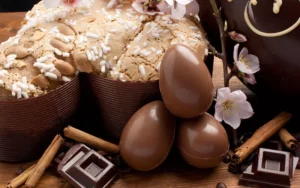
Colomba and chocolate eggs
Northern Italy: greens, butter, and quiet luxury
In northern Italy, Easter dishes are reserved and refined. They use less sugar, focus on delicate flavours, and often highlight butter and rich dairy, reflecting local tastes and ingredients.
Liguria : Torta Pasqualina
This savoury pie is built from thin layers of greens, ricotta, and whole eggs. Cut it open, and you see the layers: good picnic food, and a Ligurian classic.
Veneto: Fugassa Veneta
Fugassa Veneta is a slightly sweet bread with anise or citrus. It’s less showy than colomba, and often eaten with coffee.
Emilia-Romagna: Lasagne Verdi
Lasagne Verdi uses green pasta, ragù, and béchamel. It’s simple and elegant, letting butter and eggs shine.
Central Italy: lamb done properly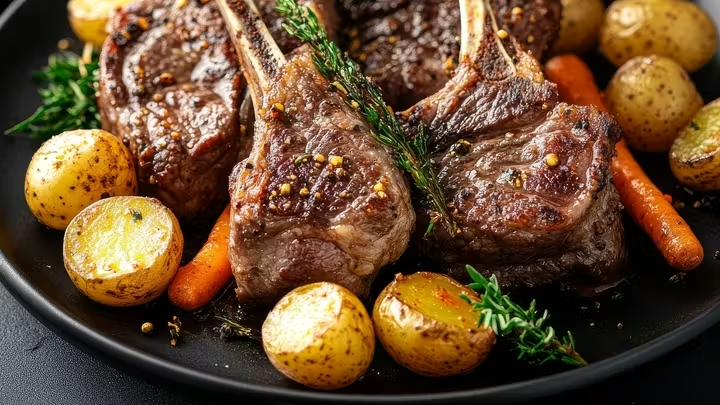
In central Italy, Easter food becomes heartier and more rustic. Bold lamb dishes and strong cheeses reflect the traditions of the interior regions.
Lazio: Abbacchio alla Romana
Young lamb is roasted or braised with garlic, rosemary, and white wine. The flavours are bold and Roman, perfect for dipping bread.
Abruzzo: Agnello Cacio e Uova
Here, lamb is finished with eggs and pecorino, making a creamy, almost scrambled sauce. It sounds unusual, but it works.
Umbria & Tuscany: Schiacciata di Pasqua
This is a slightly sweet, rich bread with anise. Italians like the balance.
Southern Italy: sugar, symbolism, and a bit of theatre
In the south, Easter is about show, unlike in the north, where traditions are more subdued. Breads become decorations, desserts carry meaning, and tables are full.
Campania: Pastiera Napoletana
Pastiera Napoletana is Naples’ essential Easter dessert. Ricotta, wheat berries, and orange blossom water make it grainy, creamy, and floral.
Campania (again): Casatiello
This savoury bread is dense, filled with cured meats and cheese, and baked with whole eggs in the crust. The rustic look is part of the appeal.
Puglia: Scarcella
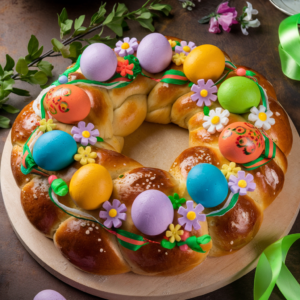
These sweet breads are shaped like baskets, doves, or hearts, often with whole eggs. They’re made at home with children and given as gifts to friends, neighbours, and family. Sharing them spreads holiday wishes and brings a bit of celebration to every table.
The islands: small places, big personality
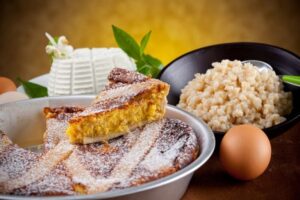
On the islands, traditions are distinct. Ricotta and saffron filled sunburst tartlets set local tables apart with bold colour and unique flavours.
Sicily: Cuddura cu l’Ova & Pecorella
In Sicily, braided breads with eggs and detailed marzipan lambs are traditional. Sometimes they look too good to eat.
Sardinia: Pardulas
Little tartlets filled with ricotta and saffron, pinched into sunburst shapes. Bright, slightly tangy, very snackable. You’ll eat more than planned.
Timing matters: what’s eaten when
- Good Friday is lighter and often meat-free. Fish or vegetable dishes are common.
- Easter Sunday is for a big lunch: lamb, rich pastas, and special breads.
- Easter Monday is for picnics and leftovers. Slices of torta pasqualina and anything easy to carry go outside.
Why the regional split actually makes sense
Italy’s regional split makes sense: Coastal regions rely on herbs, olive oil, and lighter doughs, creating dishes distinct from those of inland or northern regions.
- Inland and pastoral areas favour lamb and aged cheese.
- Northern regions, with more money, used more butter and eggs.
- In the south, abundance is on display: decorated breads, symbolic shapes, bold flavours.
Ultimately, Easter highlights what each region already does best.
Cooking at home: build your own Italian Easter menu
You don’t have to pick just one region. Italians might argue, but it’s your kitchen. Here’s a balanced menu:
- Starter: Torta Pasqualina (Liguria)
- Main: Abbacchio alla romana (Lazio)
- Side: simple spring greens with lemon
- Dessert: Pastiera Napoletana (Campania)
- Plus: a slice of Colomba with coffee
This menu gives you a taste of Italy in one meal, no passport needed.
Final bite
Easter in Italy is about repeating traditions with a twist: similar symbols, many forms. Eggs appear in many ways. Lamb’s flavour changes depending on the cooking method. Bread is art and breakfast.
If you find yourself debating which version is best, you’re doing Easter properly. For a winter version of the table, see Italian Christmas food traditions.
You can step into it yourself, on a food and wine tour in Florence, a street food run in Rome, or through regional food experiences across Italy.
-Katarina Pavicevic